
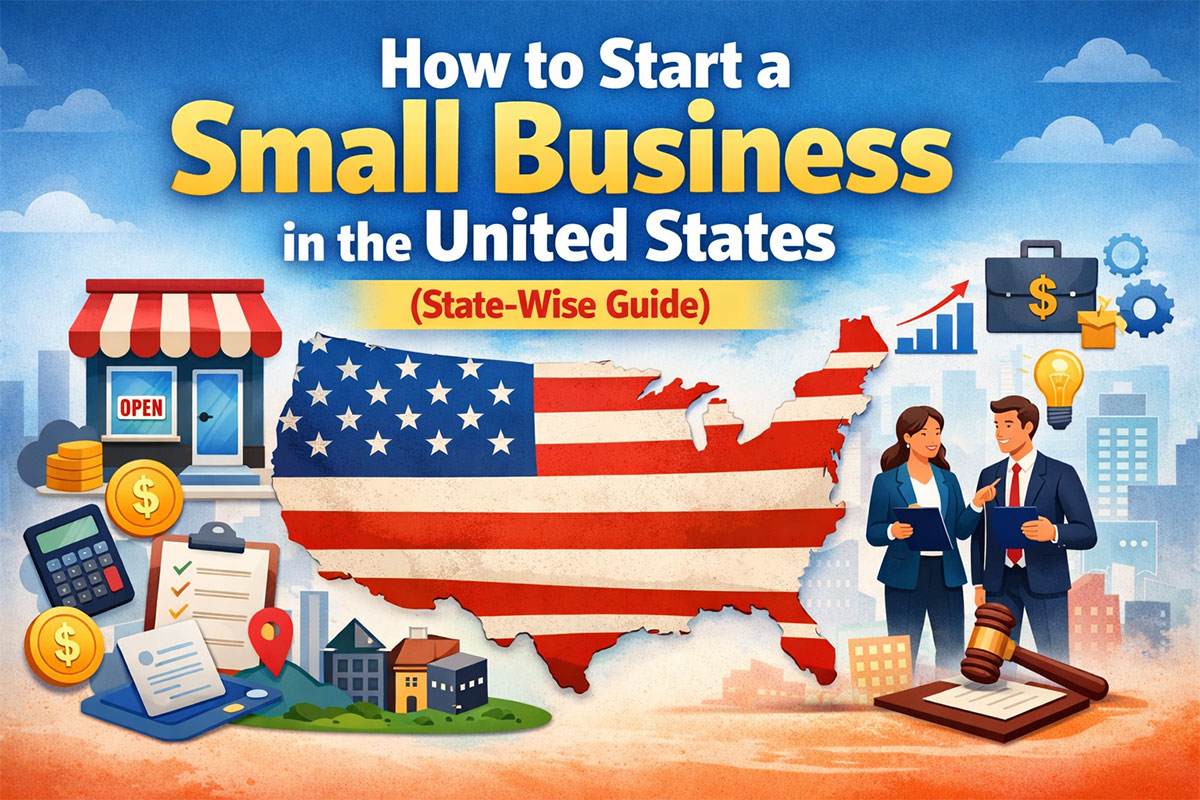
Starting a small business in the United States is a dream for many people, whether you are a US resident, a new entrepreneur, or someone planning to expand into the American market. The United States offers a strong economy, clear business laws, and countless opportunities across different states. However, starting a business is not the same in every state. Each state has its own rules, costs, taxes, and registration process. Understanding these differences is the key to starting your business the right way.
This complete state-wise guide explains how to start a small business in the United States step by step, using simple language that anyone can understand. Whether you want to open a local shop, an online business, or a service-based company, this guide will help you make informed decisions and avoid common mistakes.
Understanding the US Small Business Environment
The United States is one of the most business-friendly countries in the world. Small businesses form the backbone of the American economy, creating jobs and supporting local communities. From California to Texas, New York to Florida, every state offers unique advantages for small business owners.
One major benefit of starting a business in the US is the flexibility. You can operate as a sole owner, partner, or registered company. You can also choose where to register your business based on tax benefits, legal protection, and operating costs. This flexibility allows entrepreneurs to choose the structure and state that best fits their business goals.
Another advantage is access to resources. The US government and state governments offer guidance, funding options, and support programs for small businesses. Local chambers of commerce, Small Business Development Centers, and online tools make it easier to start and grow a business.
Choosing the Right State to Start Your Business
Selecting the right state is one of the most important decisions when starting a small business in the United States. Some states are known for low taxes, while others offer better access to customers or skilled workers. Your choice should depend on your business type, budget, and long-term goals.
For example, states like Texas and Florida are popular due to no state income tax, making them attractive for small business owners. California offers a large market and innovation opportunities but comes with higher taxes and operating costs. Wyoming and Delaware are known for business-friendly laws and simple registration processes.
If your business will operate physically, you usually need to register in the state where you live or work. Online businesses have more flexibility and may choose a state based on tax and legal benefits. Understanding these factors helps you avoid unnecessary expenses and legal issues later.
Deciding Your Business Structure in the United States
Before registering your business, you must decide on a legal structure. This decision affects your taxes, liability, paperwork, and daily operations. The most common business structures in the United States are sole proprietorship, partnership, limited liability company, and corporation.
A sole proprietorship is the simplest form and is ideal for individuals starting small. However, it does not provide personal liability protection. Partnerships work well for businesses with two or more owners but require clear agreements.
Limited liability companies, often called LLCs, are very popular because they offer liability protection while keeping taxes simple. Corporations are suitable for larger businesses planning to raise investment or expand nationally.
Each state has its own rules and fees for business structures, so it is important to choose wisely based on where you plan to operate.
Registering Your Business Name State-Wise
Once you choose your business structure, the next step is registering your business name. Your business name must be unique within your state and comply with state naming rules. Some states require specific words like “LLC” or “Inc.” to be included in the name.
Most states allow you to check name availability online through the Secretary of State website. After confirmation, you can register the name by filing the required documents and paying a fee. Fees vary by state and business type.
If you plan to operate under a different name than your legal business name, you may need to register a “Doing Business As” name, commonly known as a DBA. This process also varies by state.
Getting Federal and State Tax Identification
Every business in the United States must comply with tax requirements. Most businesses need an Employer Identification Number, also known as an EIN, issued by the Internal Revenue Service. This number is required for hiring employees, opening a business bank account, and filing taxes.
In addition to federal taxes, states may require you to register for state taxes such as sales tax, payroll tax, or income tax. The type of tax depends on your business activity and location.
Understanding tax registration early helps you avoid penalties and ensures smooth business operations from the start.
Frequently Asked Questions (FAQs)
1. How much does it cost to start a small business in the United States?
The cost to start a small business in the United States depends on the state and business type. In most states, basic registration fees range from Additional costs may include licenses, permits, insurance, and marketing expenses.
2. Which is the best state in the USA to start a small business?
There is no single best state for everyone. Texas and Florida are popular because they have no state income tax. Delaware and Wyoming are known for business-friendly laws. The best state depends on your business goals and location.
3. Do I need an LLC to start a small business in the USA?
An LLC is not required, but many small business owners choose it because it offers personal liability protection and simple tax rules. Sole proprietorships and partnerships are also common options.
4. Can a non-US citizen start a business in the United States?
Yes, non-US citizens can start a business in the United States. However, they must follow federal and state rules and may need additional documentation depending on their visa status.
5. How long does it take to register a business in the USA?
In most states, business registration can take anywhere from one day to two weeks. Online filings are usually processed faster than paper applications.
6. Do I need a business license to operate in the United States?
Most businesses need at least one license or permit. Requirements vary by state, city, and business type. Some online businesses may need fewer licenses, but local rules still apply.
7. What taxes does a small business pay in the USA?
Small businesses may pay federal income tax, state income tax, sales tax, and payroll tax. The exact taxes depend on the business structure and state.
8. Can I start a business in one state and operate in another?
Yes, but you may need to register as a foreign business in the other state. This is common for online or service-based businesses operating across state lines.
9. Is a business bank account required in the United States?
While not legally required in all cases, a business bank account is strongly recommended. It helps separate personal and business finances and looks more professional.
10. What is the easiest business to start in the United States?
Service-based businesses like consulting, freelancing, cleaning services, and online businesses are often the easiest to start because they require low investment and fewer licenses.
